

Dear Burned Out Black Girl,
You get to choose the legacy of beauty in your life.
A Different World is back.
And yes, I binge-watched the whole thing.
I grew up watching A Different World reruns. I remember getting ready for school early enough that I could eat my breakfast while watching Hillman before I had to leave the house.
I did not experience A Different World when America first experienced it. The original series premiered in 1987 and ended in 1993. I inherited it. Like so many Black girls who came after that first generation of viewers, I met Whitley Gilbert through reruns, and somehow she still felt like she belonged to us.
Now, 33 years after the original series ended, Jasmine Guy has returned as Whitley Gilbert in Netflix’s continuation of A Different World, this time following Whitley and Dwayne Wayne’s daughter, Deborah, as she begins her own life at Hillman College (Netflix, 2026).
Truth be told, I am okay leaving some of my icons in the time capsules where I first found them.
I don’t need everybody from my childhood to come back.
I don’t need everything rebooted.
And I don’t need the people who gave me something beautiful 20, 30, or 40 years ago to preserve themselves perfectly so I can continue experiencing them exactly as I remember them.
But however they choose to reemerge, I want to honor their life and their legacy.
Because you cannot be empowered by what you refuse to honor.
And Jasmine Guy is an icon.
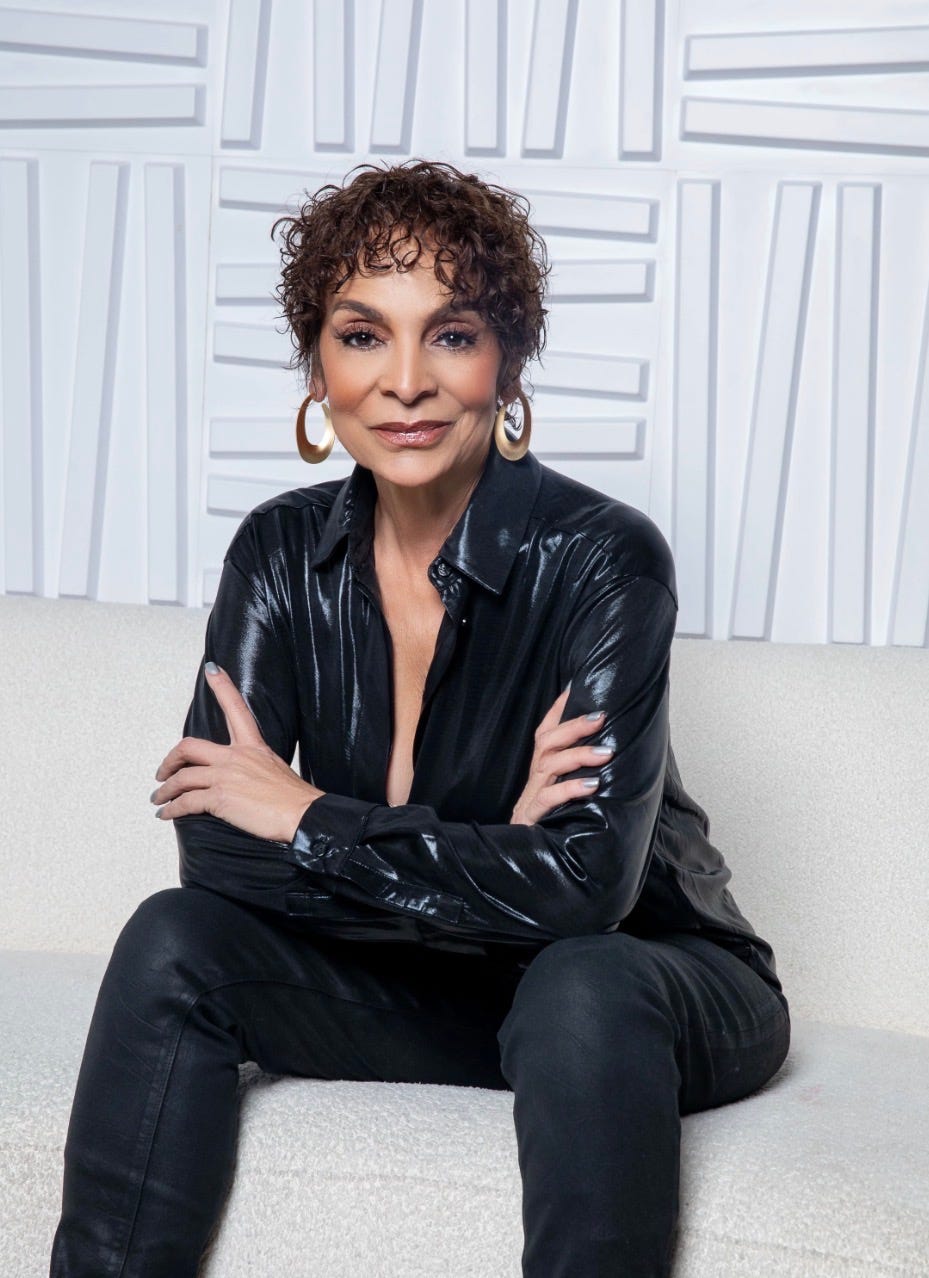
I do not know Jasmine Guy personally. I do not know enough about that woman’s private life to sit around determining whether she is a good person, a bad person, a perfect person, or any other kind of person.
I know her work.
I know her success.
I know what she created.
And I know what Whitley Gilbert meant.
Whitley was dramatic. Feminine. Southern. Particular. Privileged. Funny. Beautiful. Complicated. And completely committed to being herself.
But Whitley Gilbert was a character.
Jasmine Guy created her.
Guy has talked about how different Whitley was from who she actually was and how intentionally she developed the voice, mannerisms, and personality that became so recognizable to audiences (People, 2026).
That distinction matters.
Because somewhere along the way, people stopped separating Jasmine Guy from the image Jasmine Guy gave them.
And now she has come back decades later with the audacity to look like a woman who has lived those decades.
She has wrinkles.
Okay.
And?
That has apparently become enough for people to write dissertations about whether Jasmine Guy “aged well.”
People are comparing her to other Black actresses.
Talking about Botox.
Talking about fillers.
Talking about what skincare she should have used.
Talking about what she supposedly did or did not do years ago.
Talking about what she should have done to prepare herself to become publicly visible again.
As though beauty is some contract Jasmine Guy signed with strangers when she became famous.
As though once the public decides a Black woman is beautiful, she becomes responsible for maintaining that beauty according to their specifications for the remainder of her natural life.
Who told us her beauty was up for negotiation?
When did she agree to remain Whitley Gilbert’s age forever?
She played a role on television.
You created an expectation.
Those are not the same thing.
And maybe what is making some people uncomfortable is not Jasmine Guy’s face.
Maybe it is time.
Because if Whitley Gilbert can get older, then so can you.
If the woman who represented youth and beauty to you when you were younger can develop wrinkles, then eventually you have to confront what aging means for your own face, your own body, your own identity, and your own relationship with beauty.
And that is where this becomes bigger than Jasmine Guy.
Dear Burned Out Black Girl, you get to choose the legacy of beauty in your own life.
You get to decide whether beauty will become another job you have to perform forever.
You get to decide whether your face will become another thing you spend your entire life correcting.
You get to decide whether aging means deterioration or evidence.
Evidence that you laughed.
Evidence that you worried.
Evidence that you survived some things.
Evidence that you loved people.
Evidence that people loved you.
Evidence that you have been here long enough for your body to tell the truth about it.
Get the Botox if you want it.
Get the facial.
Wear the wig.
Wear the makeup.
Buy the expensive serum.
Lift it.
Tuck it.
Fill it.
Color it.
Moisturize it.
Train it.
Sculpt it.
Or don’t.
I am not interested in pretending that caring about beauty makes a woman shallow.
I love beauty.
Black women have created entire languages through beauty.
The point is not that beauty does not matter.
The point is that your beauty should belong to you before it belongs to an audience.
And I think that is what bothers me most about the conversation surrounding Jasmine Guy.
The arrogance of believing that because a woman once represented beauty to you, you have somehow earned the authority to determine whether she maintained it correctly.
Meanwhile, look at the actual life in front of you.
Jasmine Guy returned to the character of Whitley Gilbert more than three decades after the original A Different World ended. The new series premiered on Netflix in September 2026, landed in Netflix’s English-language television Top 10, and has already been renewed for a second season (Netflix, 2026).
Her wrinkles did not stop the camera.
Her wrinkles did not erase Whitley.
Her wrinkles did not make her unemployable.
Her wrinkles did not make her irrelevant.
Her wrinkles did not stop a new generation from meeting a character generations of Black women already loved.
And here is what I have noticed:
I have seen plenty of ordinary people on Facebook and social media dissecting Jasmine Guy’s face.
But I have not seen anyone doing all that dissecting who created Whitley Gilbert.
I have not seen anyone doing it who won four consecutive NAACP Image Awards for playing one character.
I have not seen anyone doing it who worked with Alvin Ailey, performed on Broadway, appeared in School Daze, Harlem Nights, The Vampire Diaries, Grey’s Anatomy, and built a career that has lasted across generations (Simon & Schuster, 2026).
I have not seen anybody criticizing her face who disappeared from one of her most famous roles for more than 30 years, walked back onto the screen in her sixties, and immediately had generations of people recognize her.
That is legacy.
And while everybody is arguing about whether Jasmine Guy looks enough like Whitley Gilbert, Jasmine Guy is preparing to tell us who Jasmine Guy actually is.
Her memoir, A Different Girl, written with her daughter Imani Guy Duckette, will be published in February 2027. It covers her childhood in Atlanta, her years with Alvin Ailey, Broadway, Black Hollywood, her experiences with racism, depression, self-image, motherhood, artistry, and the life that existed beyond Whitley Gilbert (Simon & Schuster, 2026).
And maybe that title says more than we realize.
A Different World gave us Whitley.
A Different Girl gives Jasmine the opportunity to tell us who she actually is.
Perhaps we should listen.
Because you do not have to stay beautiful enough for people to keep the version of you they preferred.
You do not have to preserve yourself so somebody else does not have to confront the passage of time.
You do not owe anybody the body you had at 25.
You do not owe anybody the face you had at 30.
You do not owe anybody the woman you were when they first decided you were beautiful.
You are allowed to become.
You are allowed to age.
You are allowed to change.
You are allowed to disappear.
You are allowed to reemerge.
You are allowed to walk back into rooms you earned access to without first making yourself aesthetically comfortable for everyone watching.
And maybe the beautiful thing about Jasmine Guy returning to Whitley Gilbert is not that she looks exactly like the woman we remember.
She doesn’t.
None of us do.
The beautiful thing is that she came back anyway.
Still Jasmine.
Still Whitley.
Still working.
Still creating.
Still relevant.
Still occupying rooms most of the people criticizing her will spend their entire lives imagining themselves inside of.
Still part of something culturally significant enough that almost four decades after the original premiere, people wanted to return to Hillman again.
Maybe that is what aging beautifully actually looks like.
Not defeating time.
Not pretending it never touched you.
Not spending the second half of your life desperately trying to resemble the first.
But living long enough to meet the women who grew up because you existed.
Living long enough to see what you created become somebody else’s inheritance.
Living long enough to stand inside your own legacy.
Wrinkles and all.
Dear Burned Out Black Girl,
you get to choose the legacy of beauty in your life.
Make sure your definition is big enough for you to grow old inside of it.
And while you’re at it, preorder Jasmine Guy and Imani Guy Duckette’s A Different Girl.
Maybe it is time we let the woman tell us who she actually is.