

I’m from the West Side of Chicago. Out west, to be exact. #290Shit. And if you know, you know.
There is a particular kind of humor that comes from where I’m from. It’s quick, raw, inappropriate, and sometimes so ridiculous that you can’t do anything but laugh. We can find something funny in just about anything. Even the things that hurt.
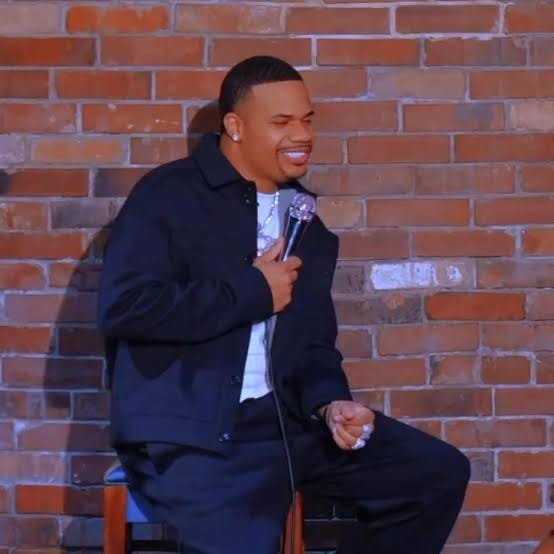
So when I started watching Mojo Brooks, his comedy felt like home.
Not just Chicago. Me.
The version of me that existed before motherhood, before becoming a therapist, and before life required so much of me.
I’ve always been funny. Hell, I was the class clown in high school. But what I understand now is that humor was one of the earliest ways I learned to cope with trauma.
Sometimes laughter was a defense. Sometimes a distraction. And sometimes it was the only light I could find in some really dark experiences.
Laughter didn’t always change what I was going through, but it changed what I could carry.
Motherhood Will Make You Lose Your Mojo
I love being a mother. I love my son, the family I’ve built, and the woman I’m becoming through raising him.
But motherhood has required a level of reorientation I couldn’t have anticipated.
We talk about postpartum depression, anxiety, and physical recovery, but we don’t talk enough about the identity disruption that can happen when you become somebody’s mother.
Even when you love your child, you can grieve access to parts of yourself. Your spontaneity, freedom, capacity to be carefree, and sometimes your sense of humor.
Not because you aren’t funny anymore, but because you’re so damn tired.
Between anticipating needs, managing responsibilities, and learning this new identity, life can become incredibly heavy.
And sometimes, even joy starts feeling like something you have to schedule.
Sometimes Healing Sounds Like Somebody From Home
One of the things I appreciate most about Mojo Brooks is how much his humor reminds me of where I come from.
There is something healing about cultural familiarity.
When you move away from home, you don’t always realize how much of your identity is connected to the language, people, and experiences that shaped you.
Then somebody says something in a way that only somebody from home would say it, and suddenly you’re laughing.
Mojo’s comedy reminds me of the people I grew up around and how we could turn almost anything into a joke.
In the middle of navigating motherhood, adulthood, and healing, those moments have been restorative.
I didn’t need another self-help book. I didn’t need somebody to explain my trauma. I didn’t need to process anything.
I just needed to laugh.
And sometimes that was enough.
The Healing Balm of Laughter
As a therapist, I spend a lot of time thinking about how people heal. Emotional regulation, trauma processing, attachment, and developing healthier coping mechanisms.
But healing doesn’t always have to be so serious.
Humor can help us create distance from distress, interrupt emotional intensity, and reconnect with ourselves and others.
Of course, humor can also be avoidance. Being the class clown wasn’t always about joy. Sometimes it was about surviving things I didn’t have the emotional resources to process.
But there’s a difference between using humor to escape your life and using humor to reconnect with it.
Even my parenting has evolved.
Sometimes my son does something that would ordinarily frustrate the hell out of me, and instead of meeting that frustration with more frustration, I can laugh, be silly with him, redirect him, and keep it moving.
Other times, I pull up a Mojo Brooks clip and laugh my ass off.
Not every parenting moment needs to become a crisis. Sometimes I can laugh, address what needs addressing, and go on about my day.
That’s growth, too.
Laughter Has Also Given Us Something to Share
Comedy has also become a source of connection in my relationship.
Furlow and I have experienced our share of challenges while learning how to build a family. But one thing we genuinely enjoy together is laughing.
Mojo Brooks has become one of those shared experiences. We watch clips, repeat jokes, and find ourselves connecting without having to work through a problem.
When you’re building a family, relationships can become consumed by logistics, responsibilities, and conversations about what needs to change.
But relationships need play, too.
They need moments that remind you why you like each other.
Shared laughter doesn’t resolve every relational challenge, but it reminds us that our relationships are supposed to hold joy, too.
Black Comedy Has Always Given Us Something
I can’t talk about the healing power of comedy without acknowledging some of the Black women who’ve made me laugh.
Mo’Nique deserves her flowers.
As a plus-size Black woman, there’s something meaningful about watching another plus-size Black woman command a stage, take up space, and be unapologetically herself.
And Ms. Pat? Whew.
Her ability to turn incredibly painful experiences into stories that make people laugh reminds me of the relationship between humor, storytelling, and survival.
How many of us grew up around Black women who could tell stories about some of the hardest experiences of their lives and somehow have everybody laughing?
Not because the experiences weren’t painful, but because they found a way to tell their stories without allowing pain to be the only thing that survived.
Sometimes laughter is how we reclaim our stories. And sometimes it’s simply how we have a good time.
That matters, too.
Getting My Mojo Back
One of the most interesting things about healing is realizing that not everything we need to recover is something we lost through trauma.
Sometimes we lose access to ourselves through responsibility, transition, becoming, and even the beautiful things we prayed for.
Motherhood has changed me. Partnership has changed me. Building a business has changed me. Healing has changed me.
I don’t want to go back to who I was before those experiences, but there are parts of that woman I absolutely want to bring with me.
The girl who could make an entire classroom laugh. Who could find something funny in a terrible day. Who knew how to be silly, playful, and completely unserious.
She’s still here.
And watching somebody from out west make people laugh reminds me that I don’t have to abandon her to become the woman I’m growing into.
I can be a good mother and still be funny. A competent therapist who laughs at inappropriate shit. A woman committed to healing who still enjoys comedy that has absolutely nothing to do with personal development.
I can take my life seriously without taking every moment of it seriously.
Because sometimes getting your mojo back isn’t about becoming somebody new. It’s about laughing hard enough to remember who the hell you were.
So congratulations to Mojo Brooks on his Netflix special. It’s beautiful seeing somebody from home doing his thing.
And thank you for the laughter.
Sometimes healing looks like crying, setting boundaries, or doing the difficult work of changing your life.
And sometimes?
Sometimes healing looks like laughing your ass off.
And I intend to do a whole lot more of that.
A question for you:
When was the last time you laughed so hard that you felt like yourself again?
And who is the comedian, person, or experience that helps you get your mojo back?
I’d love to hear about it in the comments.
If you’re a Black woman navigating burnout, motherhood, identity, or the process of building a life that actually feels good to live, subscribe to Dear Burned Out Black Girl. We’re making room for healing, growth, and joy—because you deserve more than a life you constantly need a break from.
I enjoy Ms. Pat and Monique as well. I also think Tee Sanders is pretty funny. I think I watch more movies than I watch stand up-- but I'm always looking for the humor in things. I resonate very deeply with the class clown thing! I'm always gonna find a way to laugh! ALWAYS and I'm not gon lie my mama the funniest lady I know!